
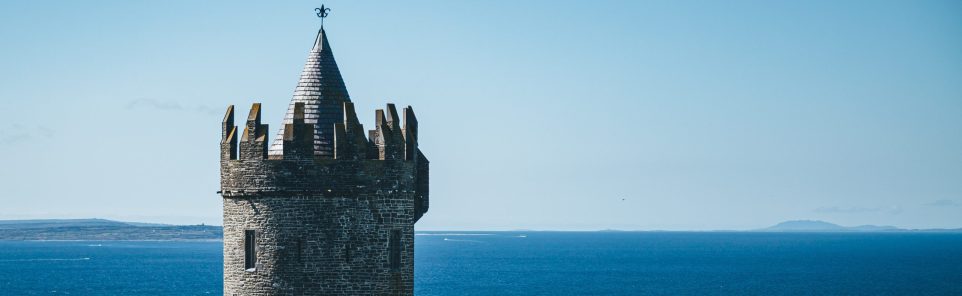
Castell Coch – A Beautiful Welsh Medieval Landmark
Castell Coch (or the Red Castle as it is known in Welsh) is one of the most beautiful and remarkable castles in Wales and the United Kingdom. An imposing medieval landmark, this fortress was originally built between the 11th and 13th centuries and rebuilt in the 19th century. The castle was built of red sandstone rubble, grey limestone, and Pennant sandstone. Its architectural style is Gothic revival and its interior designed by Victorian architect William Burges (as it is the case of Cardiff Castle as well, another imposing, important, and beautiful Welsh castle). It is situated in the proximity of the village of Tongwynlais, namely just above it on a hillside. Tongwynlais is located to the north of Cardiff.
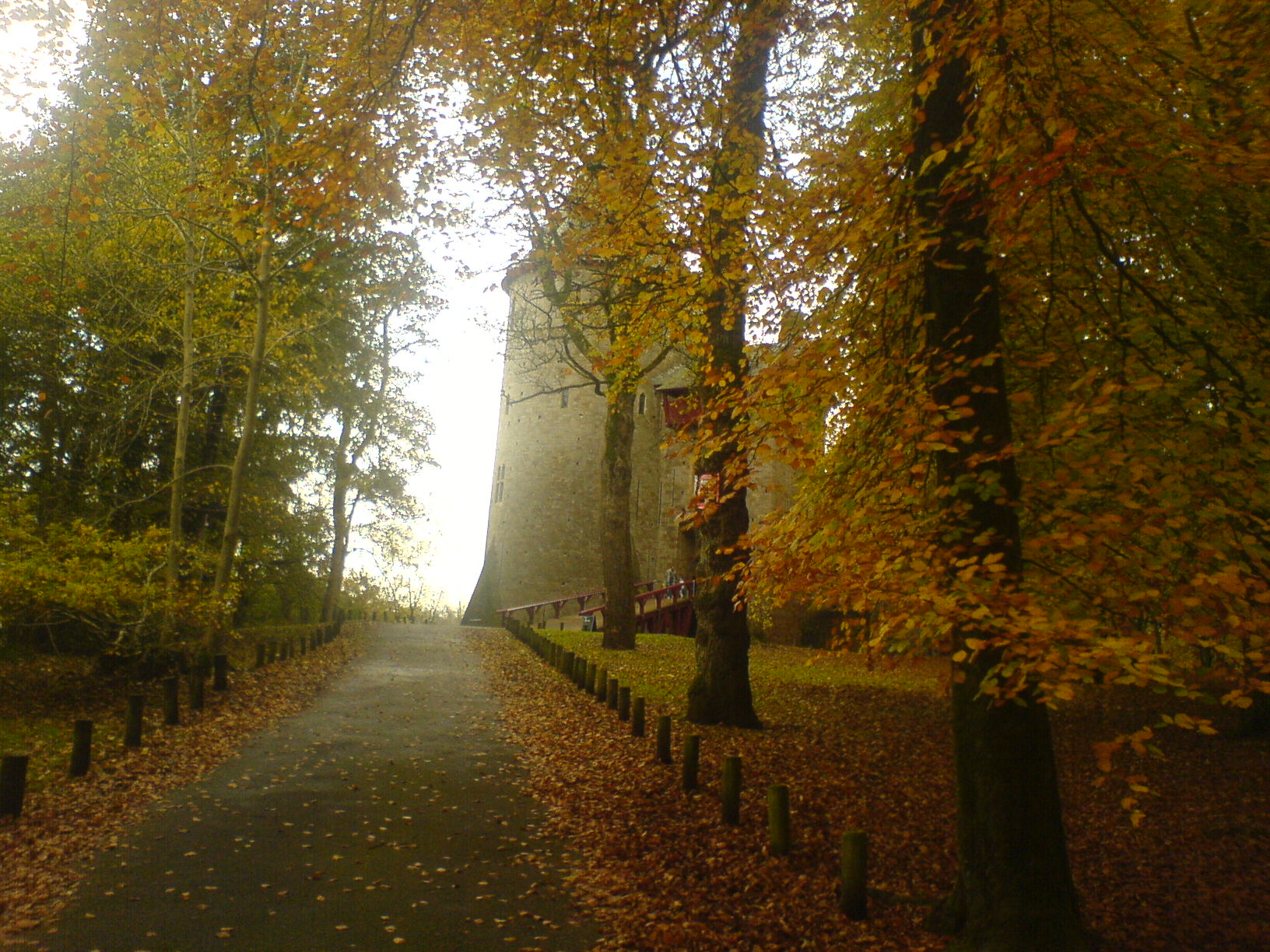
This is a beautiful and romantic view of Castell Coch (or the Red Castle in Welsh) situated in Wales, United Kingdom. Image source: Wikimedia Commons
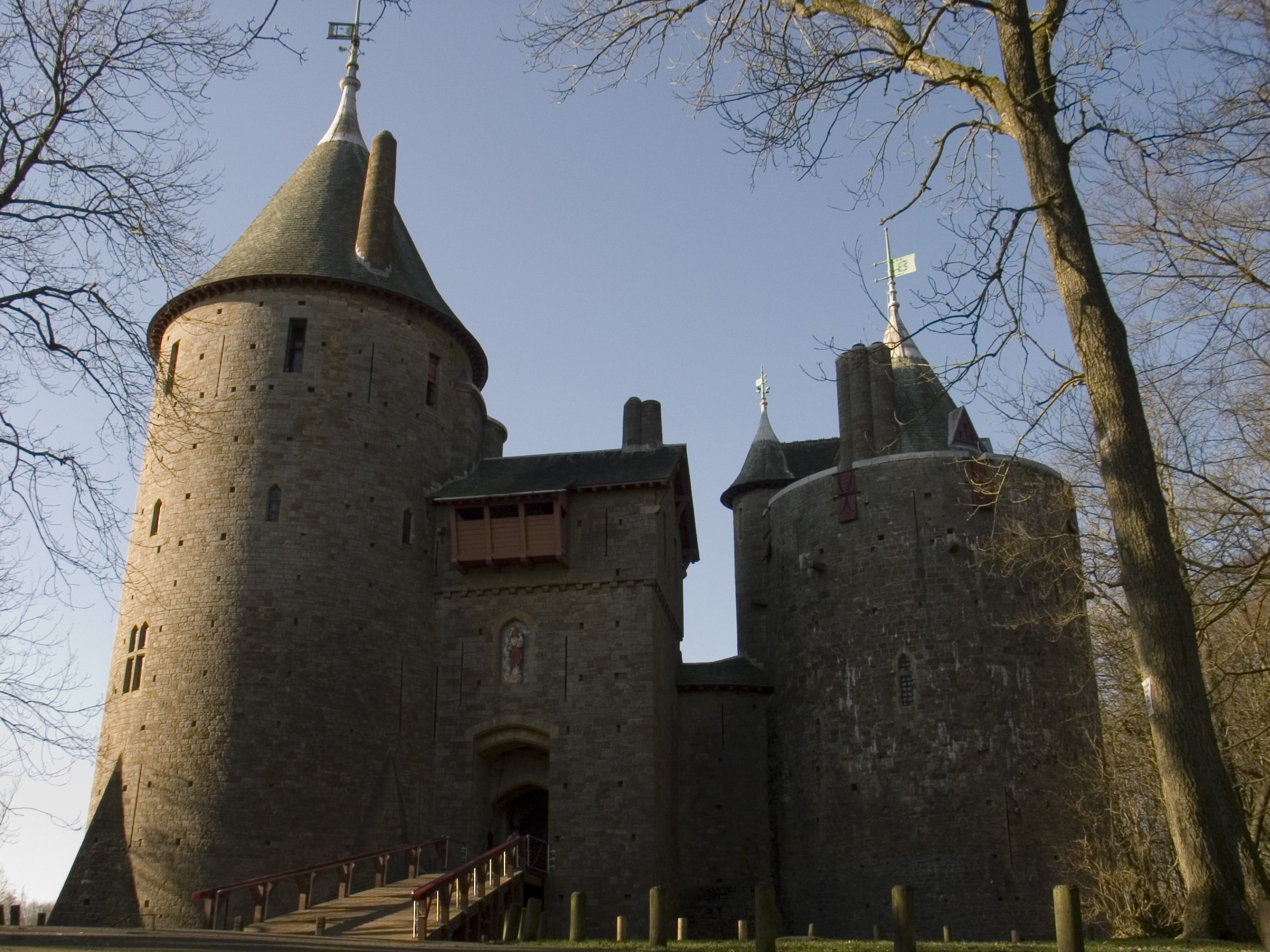
Front view of the beautiful and picturesque Castell Coch in Wales, United Kingdom, as seen in January, 2006. Image source: Wikimedia Commons
The original castle on the site of the current one was built by the Normans after the year 1081 (as part of the Norman Invasion of Wales), with main purposes to guard the then recently conquered town of Cardiff and control the neighbouring route which stretched along the River Taff. The stronghold was eventually abandoned shortly afterwards. Subsequently, Gilbert de Clare, 7th Earl of Gloucester, reused its earth motte to form the basis for another fortification built in stone, erected between 1267 and 1277. The goal of the new stone fortification was to control the earl’s then newly annexed lands in Wales. It is possible that Castell Coch was destroyed in the Welsh rebellion of 1314. During the late 18th century, namely in 1760, the ruins of the castle came into the possession of John Stuart, 3rd Earl of Bute, through a marriage settlement.
In 1848, John Crichton-Stuart, 3rd Marquess of Bute, inherited Castell Coch. At that time, he was one of the wealthiest men in Britain, being interested in architecture and antiquarian studies. Thus, he employed the architect William Burges to rebuild and design the interior of the castle, ‘as a country residence for occasional occupation in the summer’, starting from the medieval remains as a basis for the future design. The outside of the fortification was rebuilt between 1875 and 1879 by Burges, and afterwards the interior. William Burges died in 1881, but the work fortunately carried on and was finished by his team in 1891. The then owner of the castle reintroduced commercial viticulture into Britain. This process also included planting a vineyard just below the castle, Wine production started and continued there up until World War I. Nonetheless, John Crichton-Stuart did not visit his property that often. Many years later, more specifically in 1950, his grandson, the 5th Marquess of Bute, transferred the castle in the property of the state. Nowadays, it is under the control and administration of the Welsh heritage agency Cadw.
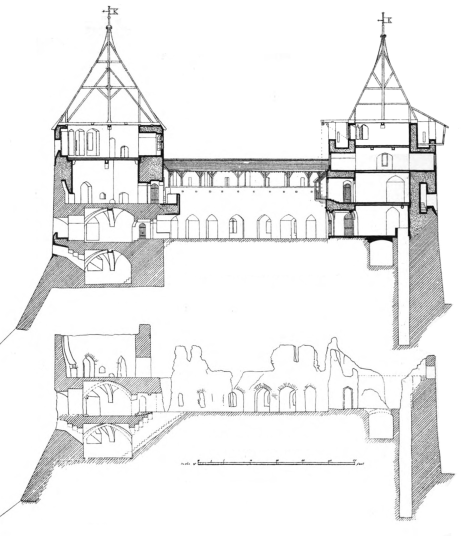
William Burges’ plan for Castell Coch from 1874. Image source: Wikimedia Commons
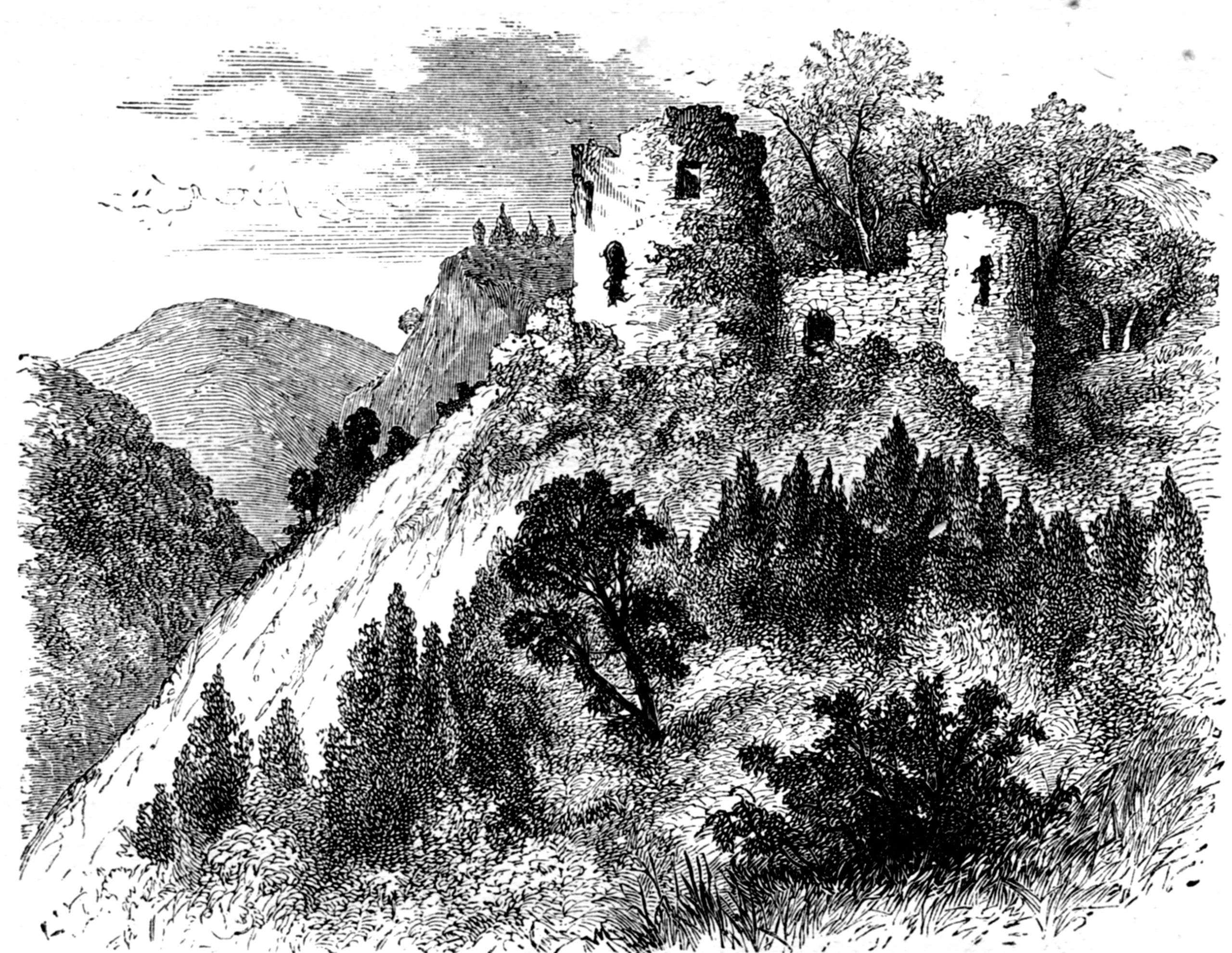
Illustration of the ruins of Castell Coch from 1874. Image source: Wikimedia Commons (original source: The History and Antiquities of Glamorganshire and its Families (1874) by Thomas Nicholas (1820–1879), page 74)
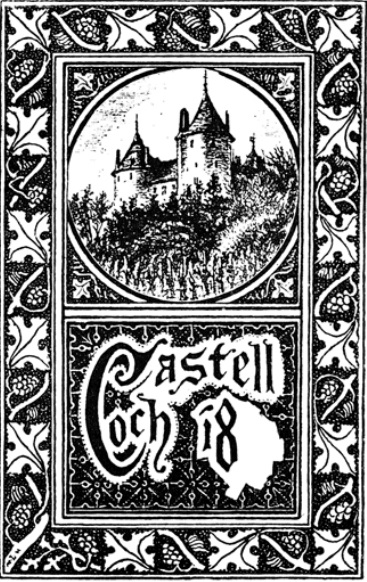
Castell Coch on a wine label dating back to 1878. Image source: Wikimedia Commons
Given the external and internal beauty of this fortification, historian David McLees described it as ;one of the greatest Victorian triumphs of architectural composition’. The interior of the castle was finely decorated with legendary and classical themes. English architectural historian Joseph Mordaunt Crook described Castell Coch as ‘the learned dream world of a great patron and his favourite architect, recreating from a heap of rubble a fairy-tale castle which seems almost to have materialised from the margins of a medieval manuscript’. Castell Coch was listed as a Grade I building in 1963. Last but not least, the surrounding beech forest comprises certain rare plant species and rather unusual geological features, collectively protected as a Site of Special Scientific Interest. Thank you very much for your time, attention, and readership!
Documentation sources and external links:
- The Wiki page of the castle on www.wikipedia.org (in English)
- More information on the castle on www.cadw.gov.wales (Welsh heritage agency)
- Tongwynlais on www.wikipedia.org (in English)