
A Brief History Of Bodiam Castle
Bodiam Castle is one of the most popular and illustrative medieval landmarks of England and the United Kingdom. This impressive, beautiful, and well-known medieval landmark is a moated castle (i.e. it is surrounded by a moat) built of sandstone which dates back to the late 14th century and is situated in the proximity of the village of Robertsbridge in East Sussex, South East England. The year in which it was constructed was 1385 at the initiative of Sir Edward Dalyngrigge, an English knight initially in the service of King Edward III as well as a politician who was member of the English Parliament, with the permission of King Richard II, as a defensive stronghold against a potential attack or invasion of the French during the Hundred Years’ War.
In the past, it served as the home of Sir Edward Dalyngrigge’s family as well as the centre of Bodiam manor itself. The castle has no keep and its constituent chambers were constructed in the proximity of the outer defensive walls and the inner courts. Nonetheless, it has several towers (with battlements) at the entrance and the corners. It is surrounded by an artificial watery landscape which adds to its medieval and fantasy charm. It has a ruined interior which can be visited and is truly worth exploring given its spiral staircases, battlements, and a portcullis (i.e. a heavy closing gate). The castle is open for visiting 363 days of the year (the sole exceptions being Christmas Eve and Christmas Day). The tea room, a local shop shop, and the castle’s courtyard can be publicly visited.
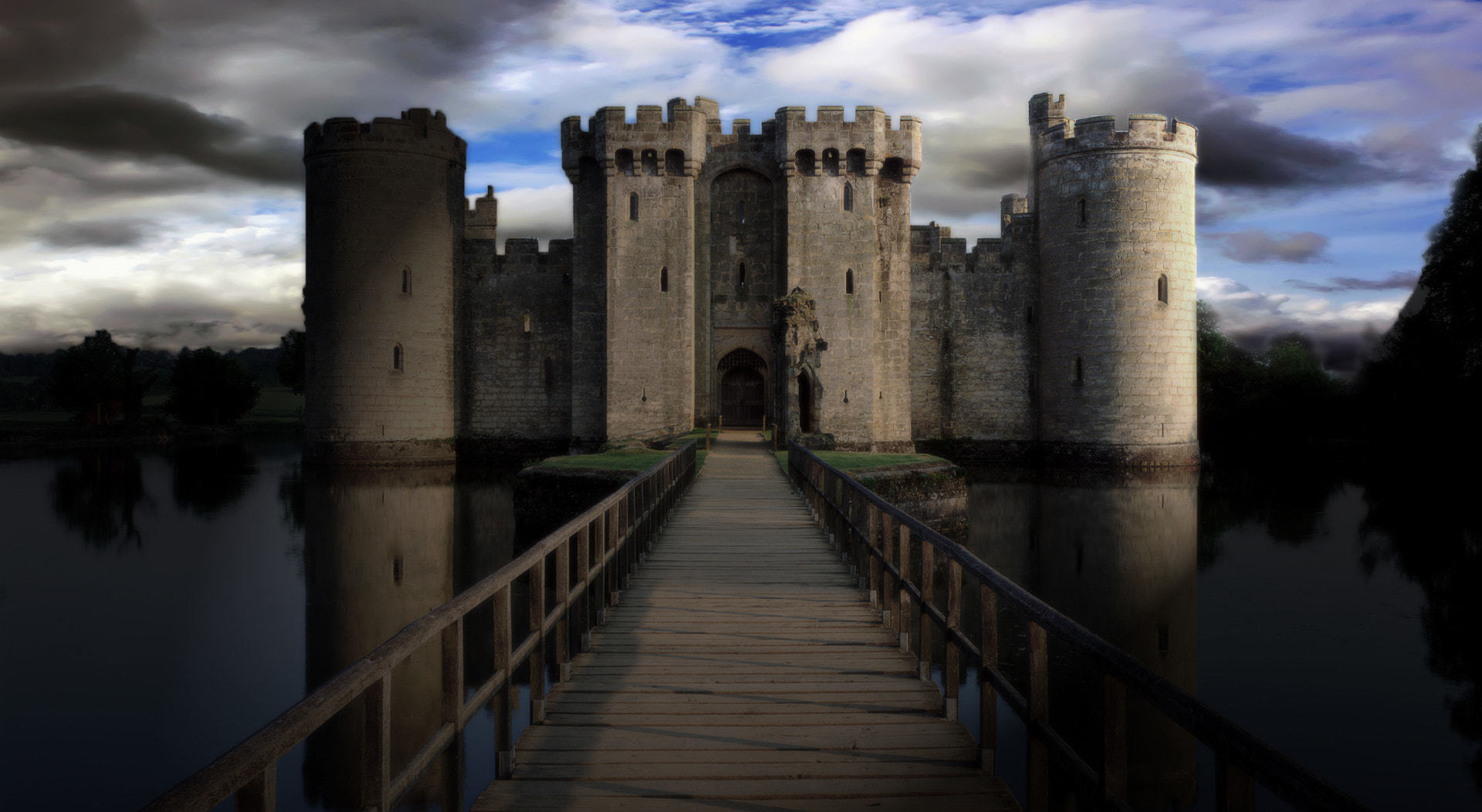
The beautiful, picturesque, and romantic Bodiam Castle, near Robertsbridge, East Sussex, south-east England, United Kingdom, one of the most remarkable castles of the Middle Ages. Image source: Wikimedia Commons (photographed by Papa Zsolt)
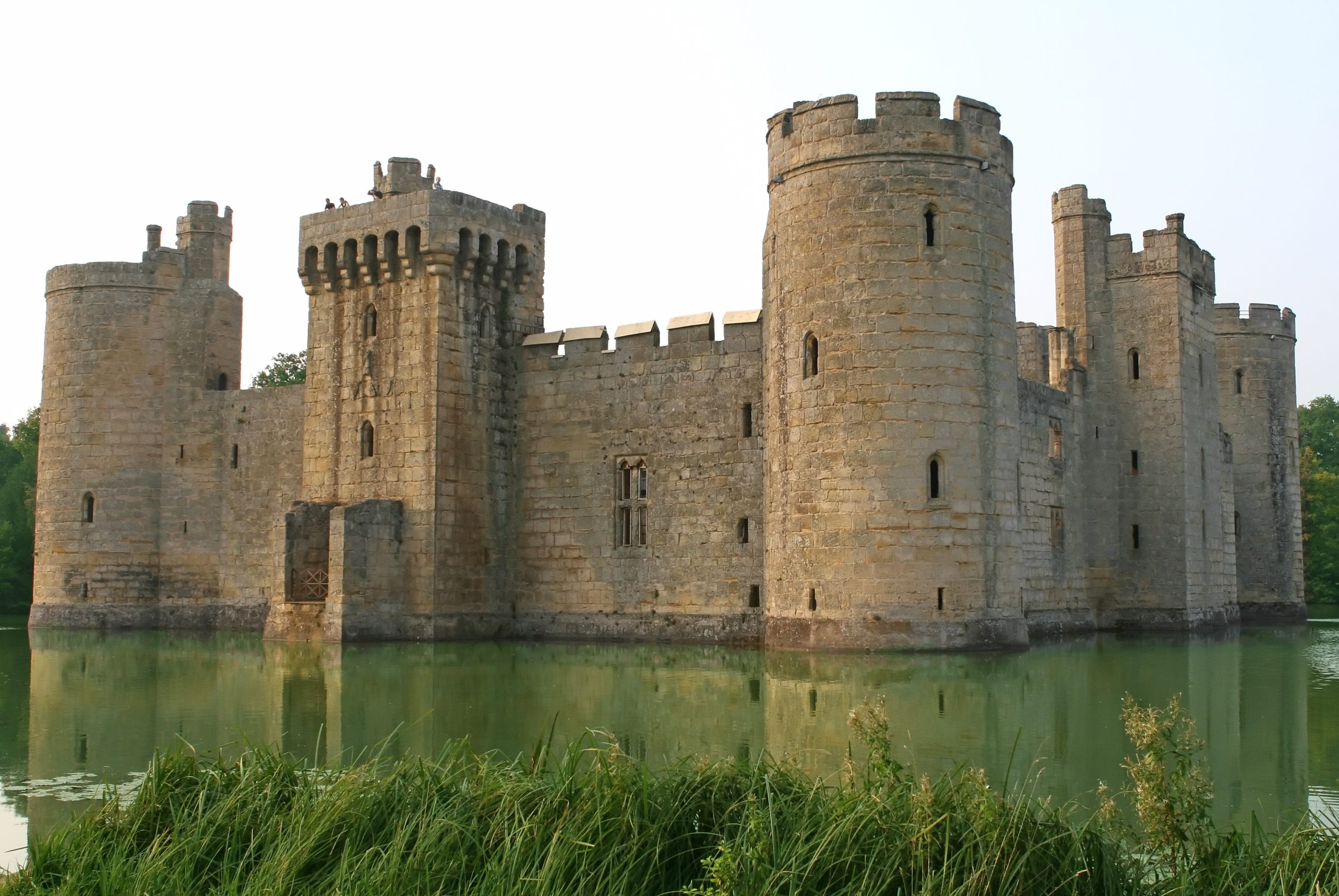
The moat around Bodiam Castle, with the defensive walls reflected on the surface of the water. Back during its golden age or heyday, the moat represented the sewage system of the castle. Image source: www.pixabay.com
Throughout the passage of time, the castle was in the possession of the Sir Edward Dalyngrigge’s family through multiple generations. After the Dalyngrigge family’s line vanished in the mist of time (i.e. became extinct), the stronghold became a possession of the Lewknor family through marriage. In the time of the Wars of the Roses, Sir Thomas Lewknor was a supporter of the House of Lancaster. After King Richard III of the House of York was crowned in 1483, a military force was sent to besiege Bodiam Castle. It is not known or documented whether the siege truly took place, but it is believed that the defenders of the castle surrounded without any major resistance. Bodiam Castle was subsequently confiscated from the Lewknor family, but returned to them during the reign of King Henry VII of the House of Tudor in 1485. Afterwards, consecutive generations of the Lewknor family owned this impressive and beautiful medieval fortress well until the 16th century.
Prior to the English Civil War, more specifically in 1641, the castle was transferred to John Tufton, 2nd Earl of Thanet. This earl was a supporter of the Royalist cause and decided to sell Bodiam Castle in order to pay the fines issued against him by the Parliament. Eventually, Bodiam Castle was destroyed and fell into ruin until it was purchased by John Fuller in 1829. Thanks to him, this important historical landmark of England was partially reconstructed. After it was restored, it was sold to George Cubitt, a nobleman, namely 1st Baron Ashcombe, and then resold to Lord Curzon. During their lifetimes, both of these noblemen contributed to the reconstruction of the castle. Lord Curzon eventually donated the castle which once was his property at death and since 1925 onwards it has been owned by the National Trust organisation. Bodiam Castle was designated as a Grade I listed building in 1961.
Given its majestic appearance, the castle was featured in many books on medieval castles throughout the passage of time. One of the books that I know of has Bodiam Castle depicted on its front cover, namely A Guide to the Medieval Castles of England by Malcolm Hislop (another book that I know which has this beautiful castle depicted on its front cover is the 2002 edition of The Usborne Internet-linked Book of Castles by Lesley Sims). In terms of popular culture, the castle appeared in Monty Python’s well-known comedy film Monty Python and the Holy Grail as the exterior or ‘Castle Swamp’.
Last but not least, Bodiam Castle is notable for its appearance in the music video of the song The Celts by the highly talented and enchanting Irish singer Enya (the song is part of her eponymous 1992 studio album). Below you can watch the respective music video embedded via YouTube. Thank you very much for your time, attention, and readership!
- The Wiki page of the castle on www.wikipedia.org (in English)
- The history of the castle on www.bodiamcastle.uk
- The history of the castle on www.nationaltrust.org.uk
- The history of the castle on www.historic-uk.com
- A beautiful photograph of the castle on www.kids.britannica.com