
The Myth Of Atlantis In Greek Mythology
The legend of Atlantis has been a fascinating tale for many people throughout the passage of time. This legend traces its roots back to ancient Greece and ancient Egypt. The ancient Greek philosopher and scholar Plato wrote about the legendary sunken city-continent of Atlantis around 360 BCE in two of his Socratic dialogues entitled Timaeus and Critias. According to Greek mythology, Atlantis was a large island situated west of the Pillars of Hercules in a certain part of the North Atlantic Ocean, ruled by king Evenor and his wife Leucippe. Evenor was the legendary ancestor of all the Atlantean kings who followed him according to Plato’s Critias. He and his wife, Leucippe, lived together in the centre of the island, on a low hill, and had one daughter by the name Cleito.

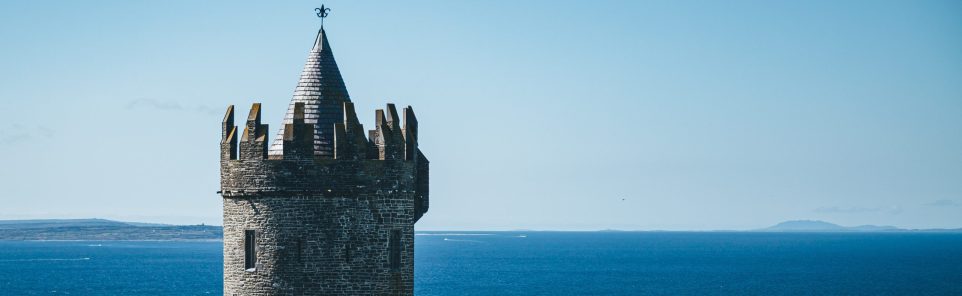
AI-generated depiction of the legendary insular city-continent Atlantis. Image source: www.pixabay.com
Tragedy struck Cleito when she had reached marriageable age as both her parents died. Nonetheless, the sea god Poseidon fell in love with her and built her a fortified house on a mountain situated in the centre of the island where she gave birth to five pairs of twins. The oldest son of Cleito and Poseidon, Atlas, became king of Atlantis and ruled the mythical island-continent alongside his brothers who were his governors. His brothers are known by the following names: Eumelus, Ampheres, Evaemon, Mneseus, Autochthon, Elasippus, Mestor, Azaes, and Diaprepes. To appease all of Poseidon’s sons, Atlantis was divided into 10 regions, each belonging to one son of Poseidon and Cleito, Atlas receiving the domain of the highest mountain.
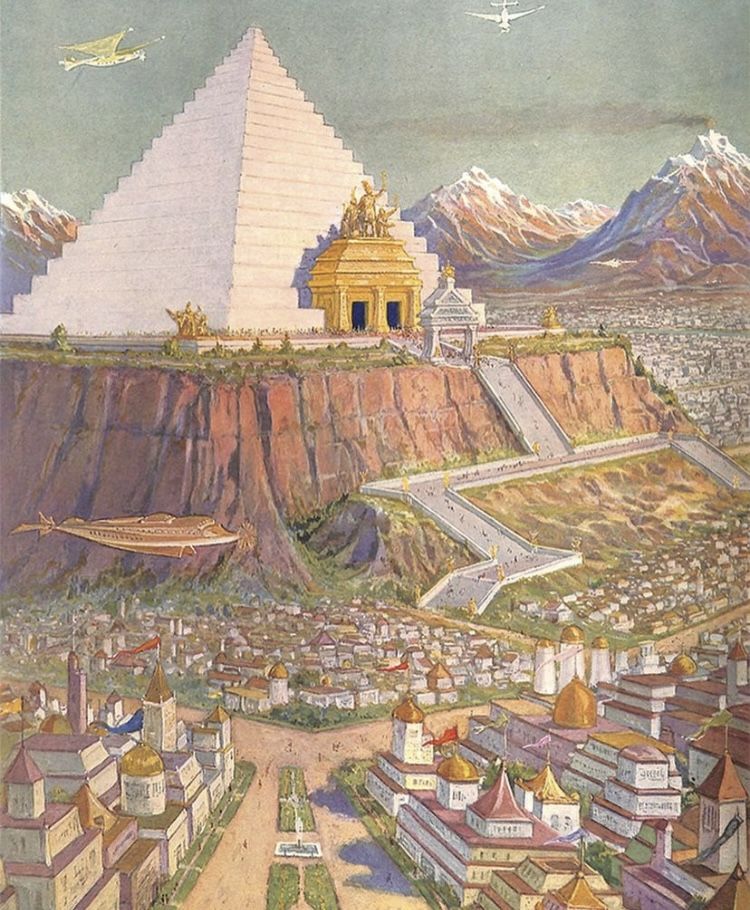
This is an idealistic depiction of the Atlantean Mystery Temple extracted from The Secret Teachings of All Ages by Canadian author Manly P. Hall. The creator of this artwork is American artist J. Augustus Knapp. Image source: Wikimedia Commons
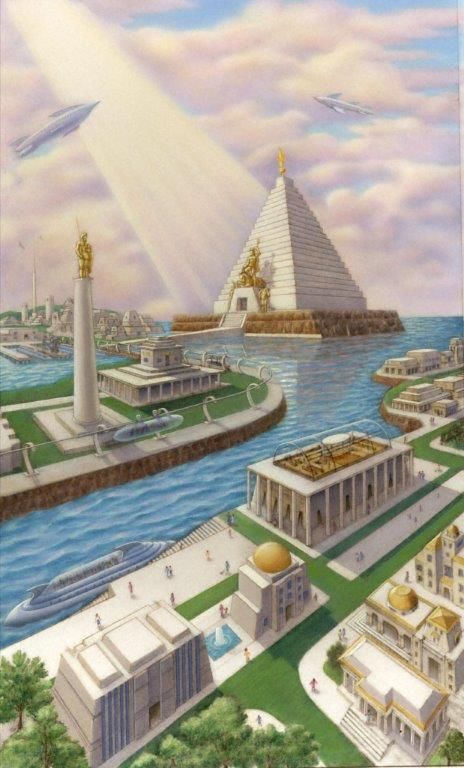
Poseida, the capital of the legendary sunken city-island continent of Atlantis in Manly P. Hall’s The Secret Teachings of All Ages. The creator of this artwork is American artist J. Augustus Knapp. Image source: Wikimedia Commons
Throughout the passage of time, Atlantis gathered great material wealth and prestige. The rise of the cities on the island is linked to the flourishing of trade and crafts. Subsequently, the descendants of the 10 sons of Poseidon and Cleito rule over Atlantis peacefully over many generations. Nonetheless, some of them eventually more ambitious, war-like, and tyrannical, becoming corrupt in the process as well and wanting to rule over the entire world. The world is at last saved by the brave Athenians who defeat the Atlanteans in a battle that allegedly took place in circa 9000 BC/BCE. Ultimately, the sea god and water lord Poseidon decided to punish the Atlanteans for their arrogance by triggering the great deluge which flooded and sunk the city-continent of Atlantis. And so, according to Greek mythology, one of the greatest civilisations in the history of mankind was lost to time…
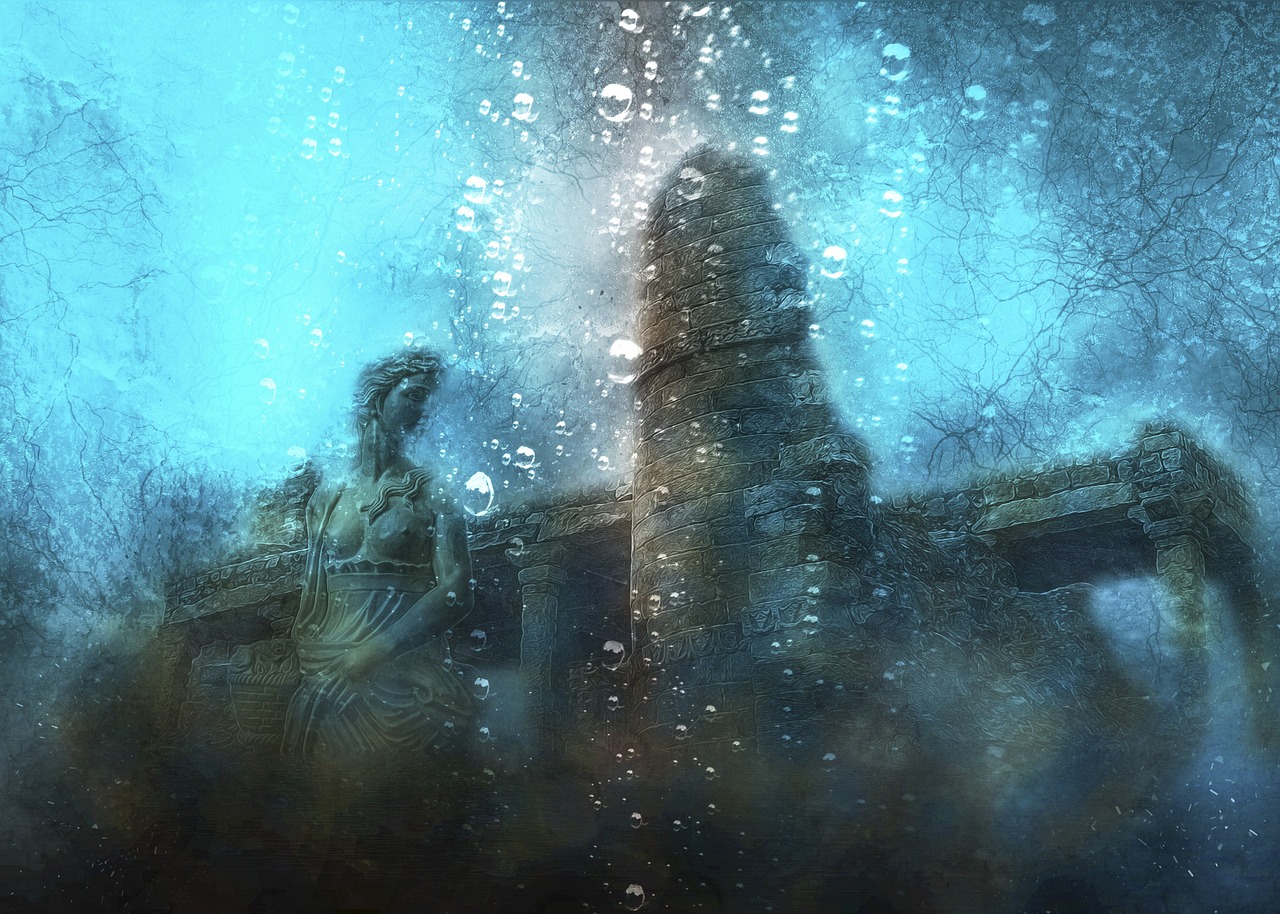
Perhaps one day, if the myth of Atlantis contains even the slightest grain of truth and was actually based on a real tale and a real location, the ruins of this legendary civilisation will be discovered on the bottom of the North Atlantic Ocean. But only time will tell if this will truly happen… Image source: www.pixabay.com
Documentation sources and external links:
- Atlantis as It Was Told in Plato’s Socratic Dialogues on www.thoughtco.com
- Atlantis (lost civilization) on www.ebsco.com
- Atlantis on www.worldhistory.org
- Evenor (Atlantis) on www.wikipedia.org (in English)
- Leucippe on www.wikipedia.org (in English)
- Cleito (mythology) on www.wikipedia.org (in English)
- Atlantis on www.wikipedia.org (in Norwegian Bokmål; an article within which I also contributed throughout the passage of time)
- The Secret Teachings of All Ages by Manly P. Hall, pages 79–82 via Internet Archive
- Din miturile lumii, enciclopedie tematică, pages 156–157 by Michael Jordan, Humanitas publishing house, 2002, ISBN: 973-50-0231-0 (in Romanian; the original version in English is titled Myths of the World: A Thematic Encyclopedia and was published in 1993)
See also:
- A Brief History Of Atlantis: Between Fact And Fiction on www.thedockyards.com
- Worldwide Locations For The Legend Of Atlantis on www.thedockyards.com
- Bimini Road: An Ancient Pathway To Atlantis? on www.thedockyards.com
- A Brief History Of Mu/Lemuria: Between Fact And Fiction on www.thedockyards.com