
Heiemo og Nykkjen – A Traditional Norwegian Medieval Ballad
Heiemo og Nykkjen is a traditional Norwegian ballad dating back to the Middle Ages, tracing its roots from the Dano-Norwegian tale Nøkkens Svig (i.e. Nøkken’s Fraud or Trick), written down in the late 16th century Danish manuscript entitled Karen Brahes Folio (a collection of folk songs). It is a ballad which involves a maiden and a nøkken (or nykkjen, as in the title, which is an alternative spelling of the same word), a water spirit from the Scandinavian folklore which is related to the fossegrimen who dwell in the waterfalls and are said to be enchanting fiddle players. The nøkken (equally referred to as either Näcken or Nix) is also a shapeshifter and this particular aspect can make it be even more dangerous. Usually, it is a malevolent supernatural creature who lures people (especially women) to drown in the lake it dwells by playing enchanting music on the violin. The sight of a nøkken is therefore a very bad omen as it will send its victims to a watery grave through deceptive music.
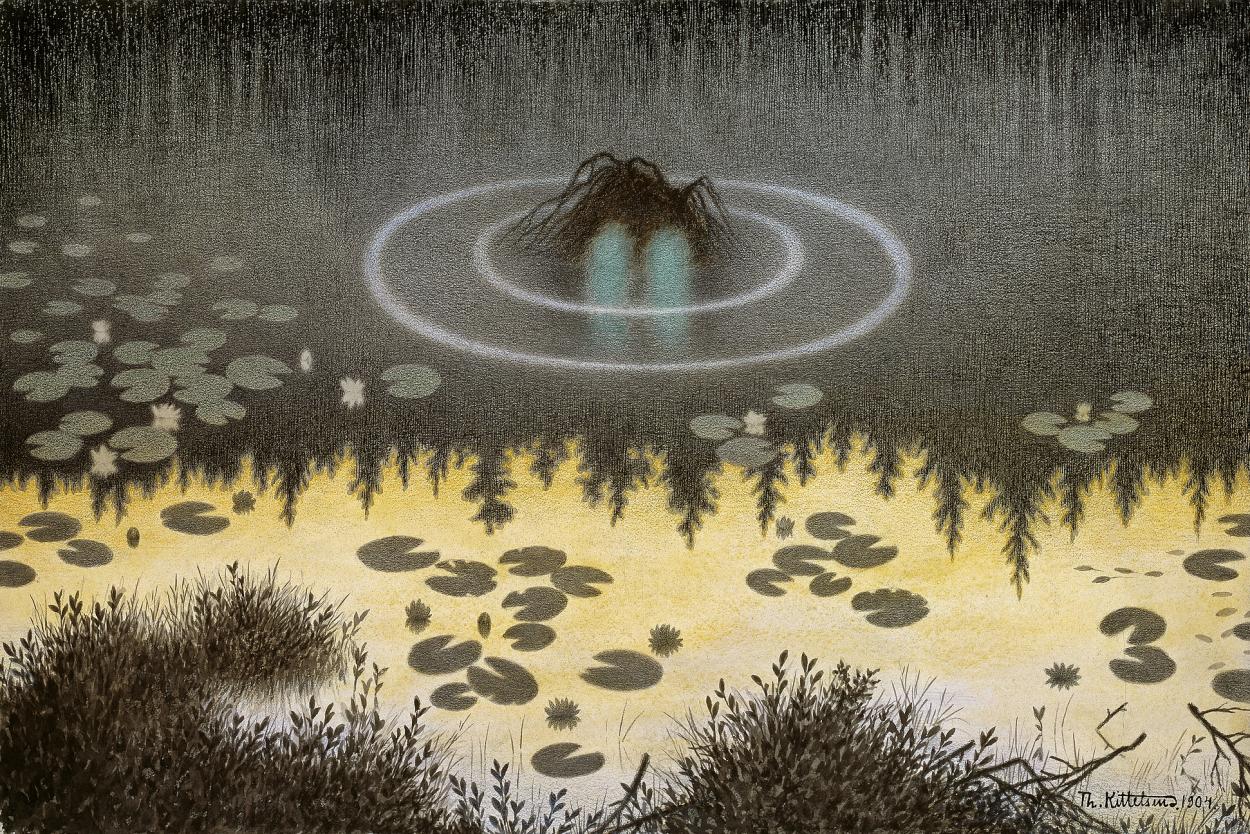
Early 20th century painting of a Nøkken by Norwegian skilled painter Theodor Kittelsen. As it can be clearly seen here, this traditional dangerous supernatural creature from the Scandinavian folklore has spooky earthly-curly hair and big, cyan-(sort of) glowing eyes (traditional spooky earthly-curly hair and big, menacing cyan-glowing eyes, not ordinary big glowing eyes like other lake monsters have, naturally). Image source: Wikimedia Commons

An alternative painting by Theodor Kittelsen depicting the nøkken. Image source: Wikimedia Commons
Nonetheless, not all nøkkens are purely evil, some are just rather mischievous, preferring to resort to tricks or hoaxes instead (so, best case scenario, they are just annoying tricksters). It is believed that this spooky water spirit can also teach music to those who might perform tiny sacrifices for him, such as a drop of blood, a black animal, or alcohol (so perhaps some Tuborg will do if you will, that is if one is lucky enough to encounter a traditional Danish nøkken; in stark contrast, traditional Norwegian nøkkens might prefer something different, depending on their drinking mood, maybe something from REMA 1000, who knows, but I for one don’t think they are that picky or, at least, I hope they aren’t, but it has to be something a bit traditional I imagine). On a metaphorical level, this supernatural creature is the embodiment of the duality of nature and more specifically of water, that is both calm or still on the surface but dangerous within its depths.
This traditional Norwegian ballad gives a fairly detailed account on the interaction between a maiden and a shape-shifting nøkken who follows her. I don’t want to give any spoilers, but I’d like to limit myself that the story doesn’t end that well for the nøkken (and rightfully so). But I mean, who’s to blame? On a more serious note, throughout the passage of time, this traditional medieval ballad was recorded and performed by various artists, including, but not limited to, the following ones: Kirsten Bråten Berg (my all time most favourite version of this medieval Norwegian ballad is by her, by far, I must admit), Fjellfolk, Helene Bøksle, Bjørn Breimo, Kerstin Blodig, Víík, Elisabeth Vik, Thale Krogtoft (her version was performed at the Voice of Norway in 2025) or talented Myrkur from Denmark.
Below you can listen to my most favourite version of this medieval ballad by highly talented Norwegian singer Kirsten Bråten Berg (with the background photograph depicting the breathtakingly beautiful Seven Sisters waterfall or De syv søstrene in Geirangerfjorden in Sunnmøre in Møre og Romsdal, Vestlandet):
Thank you very much for your time, attention, and readership! Last but not least, I truly hope I didn’t bore you. All the best!
Documentation sources and external links:
- From Nøkk to Nix on www.norwegianamerican.com
- Heiemo og Nykkjen on www.wikipedia.org (in Norwegian Bokmål; an article within which I also contributed a bit throughout the passage of time)
- The Scandinavian Ballad Nøkkens Svig on www.scribd.com
- Folkeviser: Nøkkens Svig on www.kalliope.org
See also:
- Haugebonden – A Traditional Norwegian Medieval Ballad, another interesting and more peaceful traditional Norwegian ballad on the interaction between a farmer and a boat nisse (i.e. farm gnome spirit)
- A Brief Introduction To Traditional Norwegian Music
- Bukkehorn – An Ancient Traditional Scandinavian Instrument
- Music Of The Viking Era, Its Instruments, And How It Was Performed